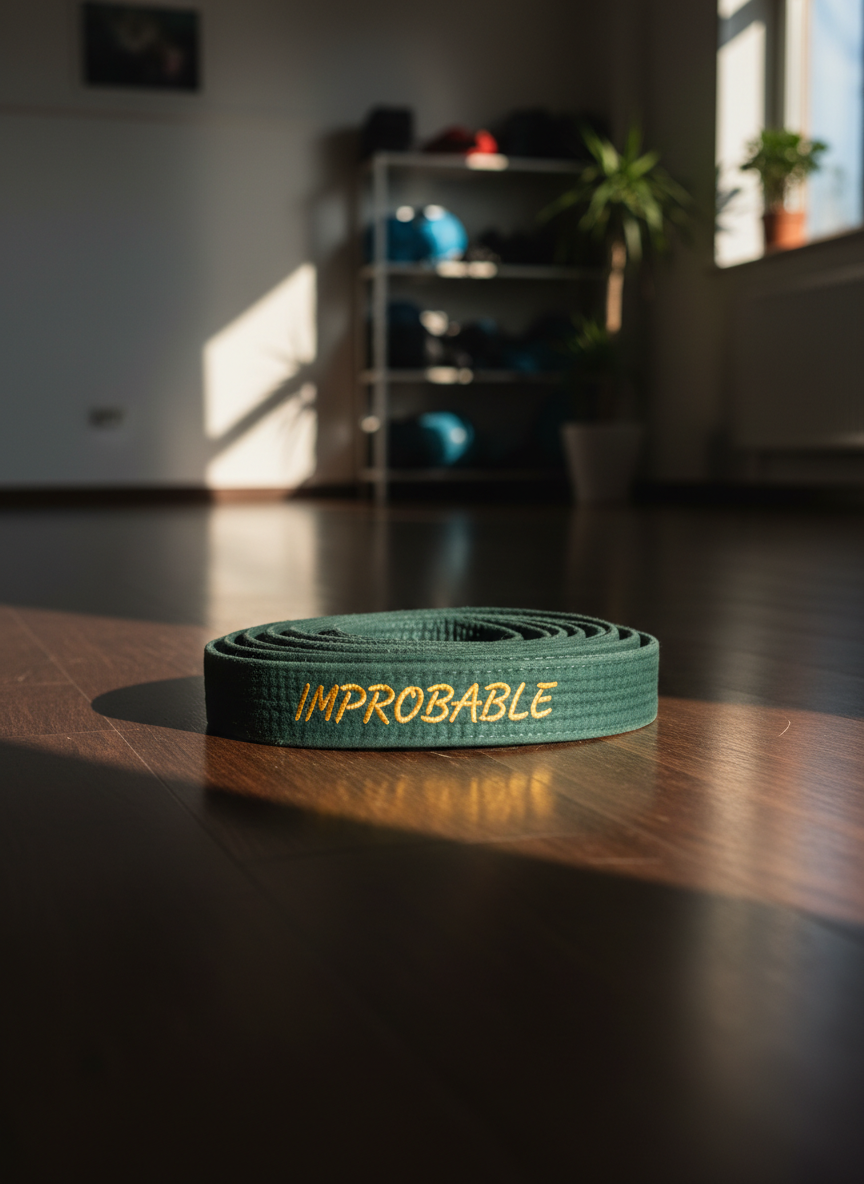
A well-worn, dark green karate belt coiled with precise symmetry on a polished wooden dojo floor, the fabric slightly frayed at the edges, embroidered with subtle gold characters spelling “Improbable.” Around it, the floorboards show faint scuff marks that suggest years of disciplined practice. Late afternoon light pours in from unseen high windows, creating a cinematic, diagonal beam that catches the belt’s texture and casts a long, elegant shadow. The background falls into a soft, indistinct blur of dojo walls and equipment racks, emphasizing the belt as the central symbol of the memoir. Shot at eye level with a shallow depth of field, the mood is reflective and sophisticated, evoking legacy and quiet resilience in a richly cinematic, photorealistic style.

Improbable Story

Follow Corey Green’s unlikely path from shy kid to sensei and founder of Green’s Karate.

Reviews
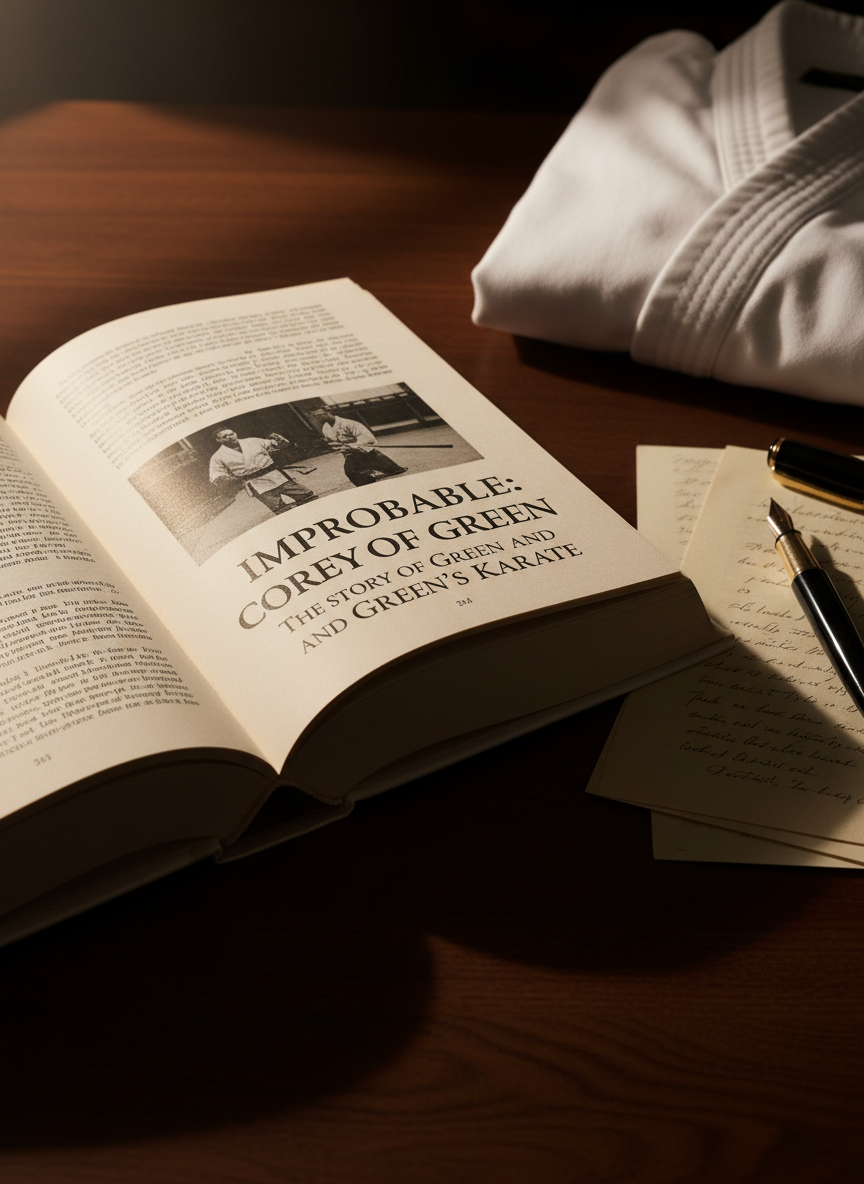
An open, hardcover memoir titled “Improbable: The Story of Corey Green and Green’s Karate” resting on a dark walnut desk, its creamy pages slightly curled from repeated reading. Beside it lies a vintage black fountain pen with a gold nib, a few handwritten notes visible beneath translucent tracing paper. A single, neatly folded karate gi rests in the background, its crisp white fabric softly illuminated. Warm, directional lamplight from the upper left pools across the book’s spread, creating cinematic highlights on the ink and subtle shadows along the page edges. Captured from a slightly elevated angle using the rule of thirds, the scene feels intimate, scholarly, and sophisticated, blending literary gravitas with the discipline of martial arts in a clean, cinematic aesthetic.

Aya Nakamura

Sensei Green taught me to bow to fear, then move anyway; that confidence carried me through college, parenting, and starting my own business.
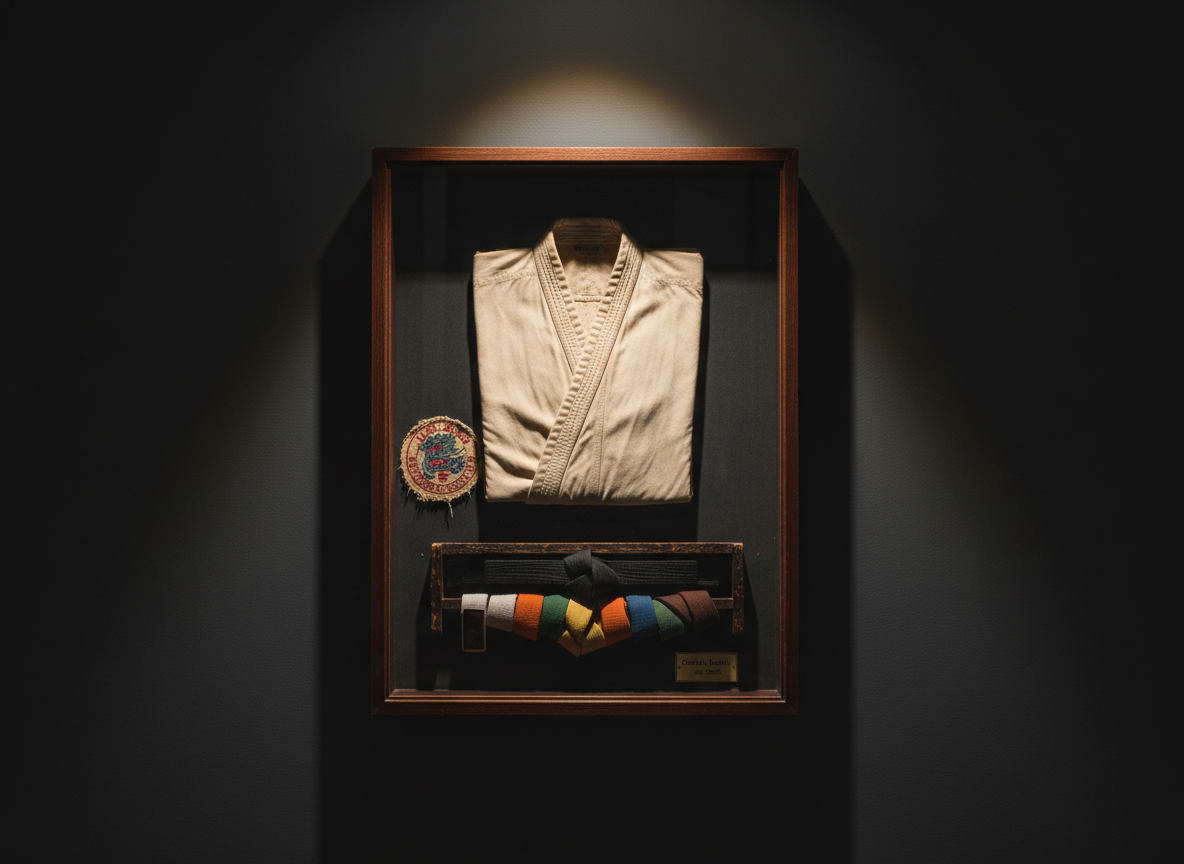
A meticulously arranged shadowbox display mounted against a deep charcoal wall, containing a preserved karate uniform, a faded dojo patch, an old wooden belt rack, and a small plaque reading “Green’s Karate – Est. 19XX.” Each item shows gentle wear: faint wrinkles in the gi, minor nicks on the wood, soft discoloration on the patch’s threads. A single overhead spotlight creates a dramatic, cinematic pool of light, leaving the surrounding wall in velvety darkness and casting elegant, elongated shadows. Shot straight-on with sharp focus throughout, the composition is symmetrical and museum-like, suggesting an official archive of a life’s work. The atmosphere is reverent, contemplative, and sophisticated, echoing the memoir’s tone and emphasizing lineage, memory, and legacy in a photorealistic style.

Mateo García

At Green’s Karate, I came for self-defense and left with a second family that still supports my sobriety and service work today.